
The data you’ve provided is already comprehensive and highly valuable. From the perspective of a professional marketer, these insights carry strong strategic value. To make it more engaging, structured, and suitable for a website blog, I’ve refined and rewritten the content as follows:
Introduction
In today’s digital marketing landscape, there is a strategy that allows brands to capture attention effectively—without requiring massive budgets.
That strategy is known as Guerrilla Marketing.
This concept was popularized by Jay Conrad Levinson, who introduced it as a revolutionary approach for small businesses, fundamentally changing the way marketing is perceived worldwide.
🎯 Definition of Guerrilla Marketing
Guerrilla Marketing is a strategy that combines creative, unexpected, and low-cost tactics to surprise audiences and significantly enhance brand awareness.
Simply put:
“It’s not about spending more money—it’s about having a better idea.”
🧠 Why is Guerrilla Marketing Important?
In today’s digital world, businesses face three major challenges:
- Ad Overload – Consumers are overwhelmed by excessive advertising.
- Short Attention Span – People’s attention spans are shorter than ever.
- Ad Avoidance – Traditional ads are often ignored or skipped.
In this environment, Guerrilla Marketing stands out as one of the few strategies that can simultaneously deliver:
- Attention-Grabbing Impact
- Emotional Connection
- High Shareability
🔥 The Four Core Pillars of Guerrilla Marketing
- Surprise
Campaigns must disrupt expectations through unexpected placements or messages. - Creativity Over Budget
Ideas matter more than money, making it ideal for SMEs. - Engagement
Campaigns should encourage participation—people should want to interact, take photos, and share. - Viral Potential
Unique concepts naturally generate organic reach and free exposure on social media.
📊 Types of Guerrilla Marketing
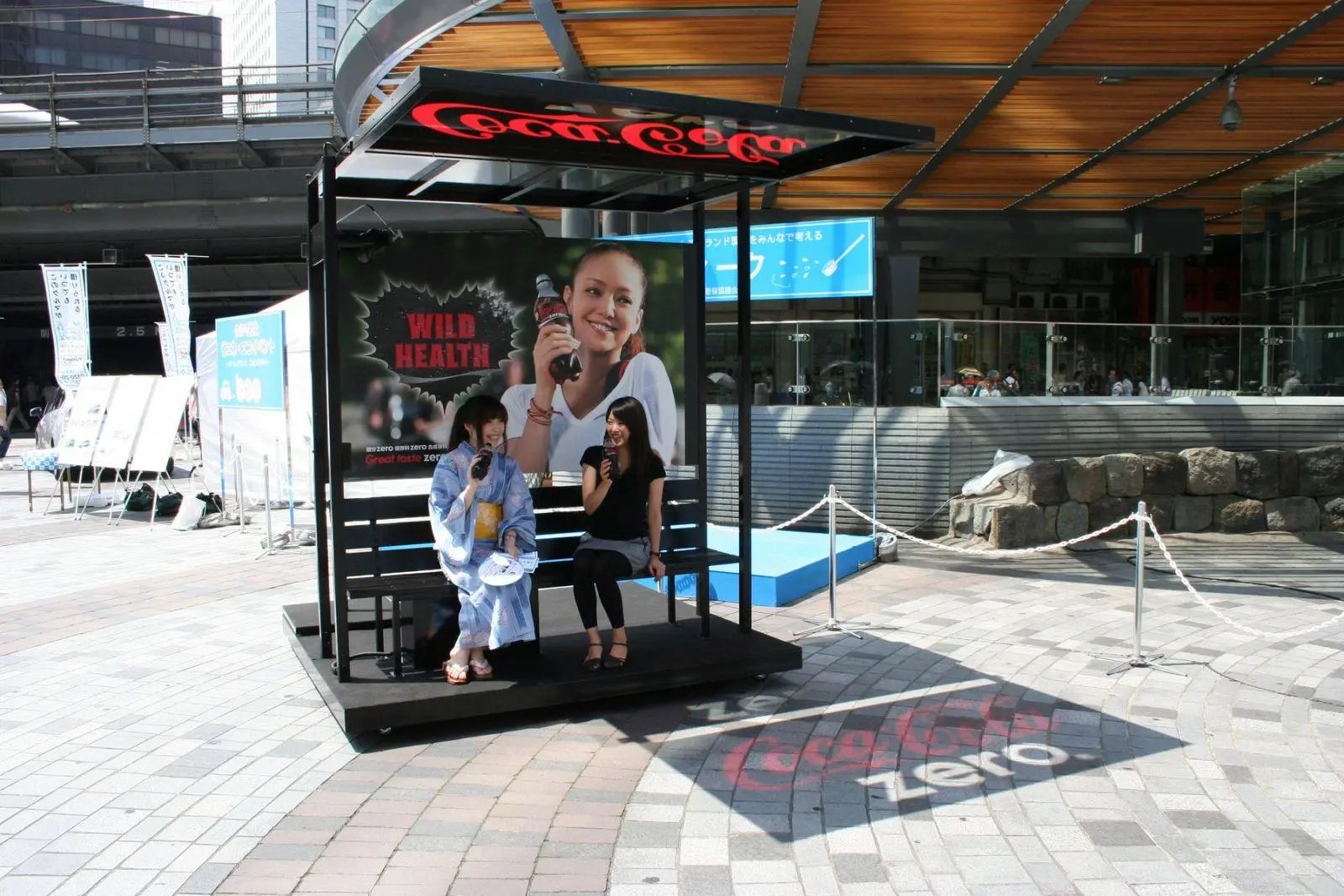
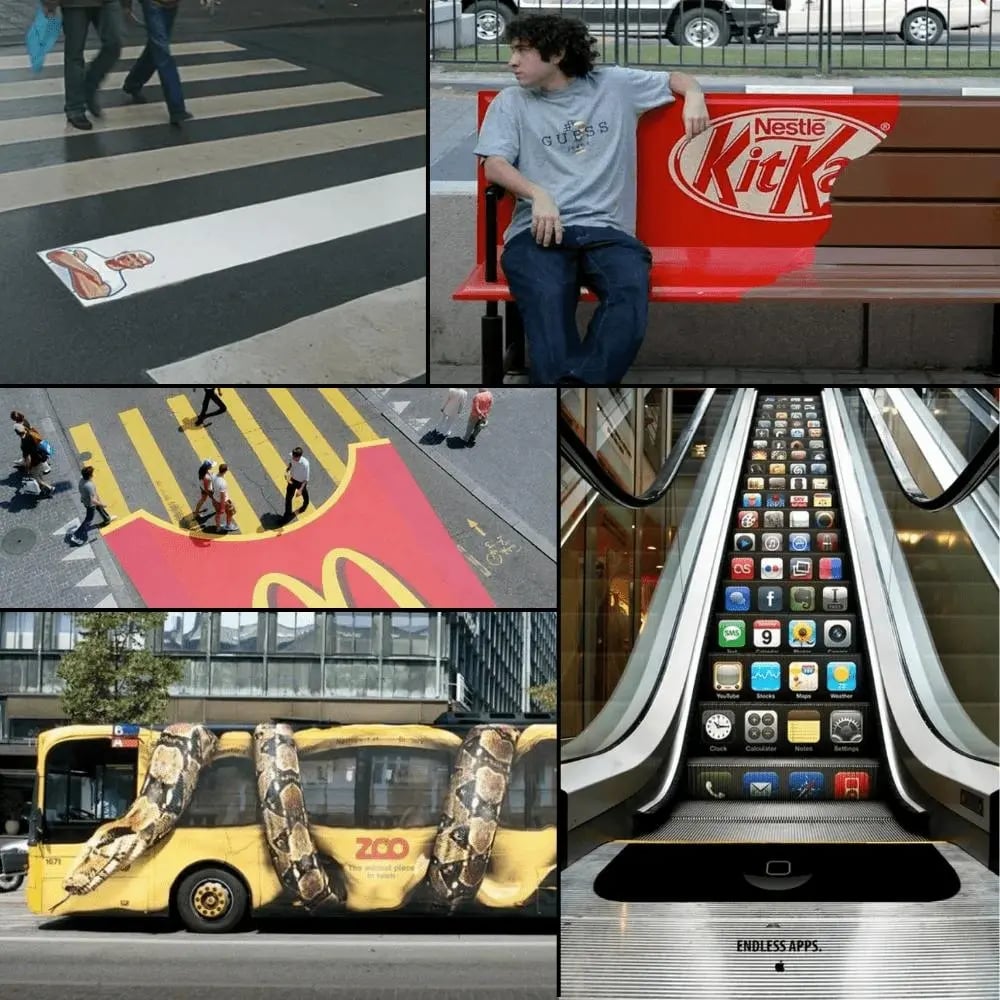
- 🟢 Ambient Marketing:
Using public spaces creatively (e.g., bus stops, benches, staircases). - 🟡 Experiential Marketing:
Providing direct, immersive experiences (e.g., flash mobs, live events). - 🔵 Ambush Marketing:
Cleverly leveraging major events without being an official sponsor. - 🔴 Viral / Buzz Marketing:
Designing campaigns that spread rapidly online.


💡 Real-World Case Studies
- 🥤 Coca-Cola – Happiness Machine
Delivered unexpected surprises beyond just drinks, creating emotional engagement and viral reach. - 👟 Nike – Street Activation
Integrated urban environments with strong brand identity through creative executions. - 🍟 McDonald's – Crosswalk Fries
Transformed pedestrian crossings into fries—simple yet highly memorable branding.
⚖️ Advantages & Considerations
| Advantages | Disadvantages |
|---|---|
| Cost-effective | Risk of negative public reaction |
| Strong brand recall | Legal and permission challenges |
| High viral potential | Difficult to scale consistently |
🚀 Practical Applications in ASEAN Markets
Guerrilla Marketing can be especially effective in emerging markets:
- Idea 1:
Use creative quote boards in high-traffic areas to share marketing insights. - Idea 2:
Capture real public reactions and repurpose them into TikTok content. - Idea 3:
Place short, impactful marketing tips on coffee cups or stickers.
🧩 Guerrilla Marketing Framework
- Define your target audience
- Develop a strong, emotion-driven idea
- Select the right location
- Execute the campaign effectively
- Capture high-quality photo/video content
- Amplify through social media
✍️ Conclusion
Traditional marketing follows the principle:
“Spend more → Get more.”
In contrast, Guerrilla Marketing operates on:
“Think differently → Gain attention.”
It’s not about how much you spend—
it’s about how creatively you can surprise your audience.
🌟 Final Insight
“Marketing is not about how much you spend, but how well people remember you.”