

Learn how to build, optimize, and scale high-converting email campaigns
Email marketing is a powerful digital marketing strategy that involves sending targeted messages to subscribers’ inboxes to promote products or services, build customer relationships, and drive sales. It is one of the most effective and widely used marketing tools, with email marketing revenue projected to grow by 287% worldwide from 2024 to 2032.
According to a study conducted by Edelman DXI on behalf of Mailchimp:
- 95% of marketers agree that email marketing delivers excellent ROI.
- 9 out of 10 marketers consider it a crucial part of their overall marketing strategy.
- 4 in 5 customers prefer email over any other form of brand communication.
How Email Marketing Can Benefit Your Business
Marketing emails can serve multiple purposes, including:
- Engagement – Keep subscribers informed and interested with compelling content such as shoppable blog posts, newsletters, and how-to guides.
- Information – Notify customers about new product launches, business updates, or policy changes.
- Conversion – Drive sales with exclusive discounts, promotions, and personalized offers.
In this article, we’ll explore how email marketing can help you grow your business and provide actionable tips for launching a successful email campaign.
Types of Marketing Emails
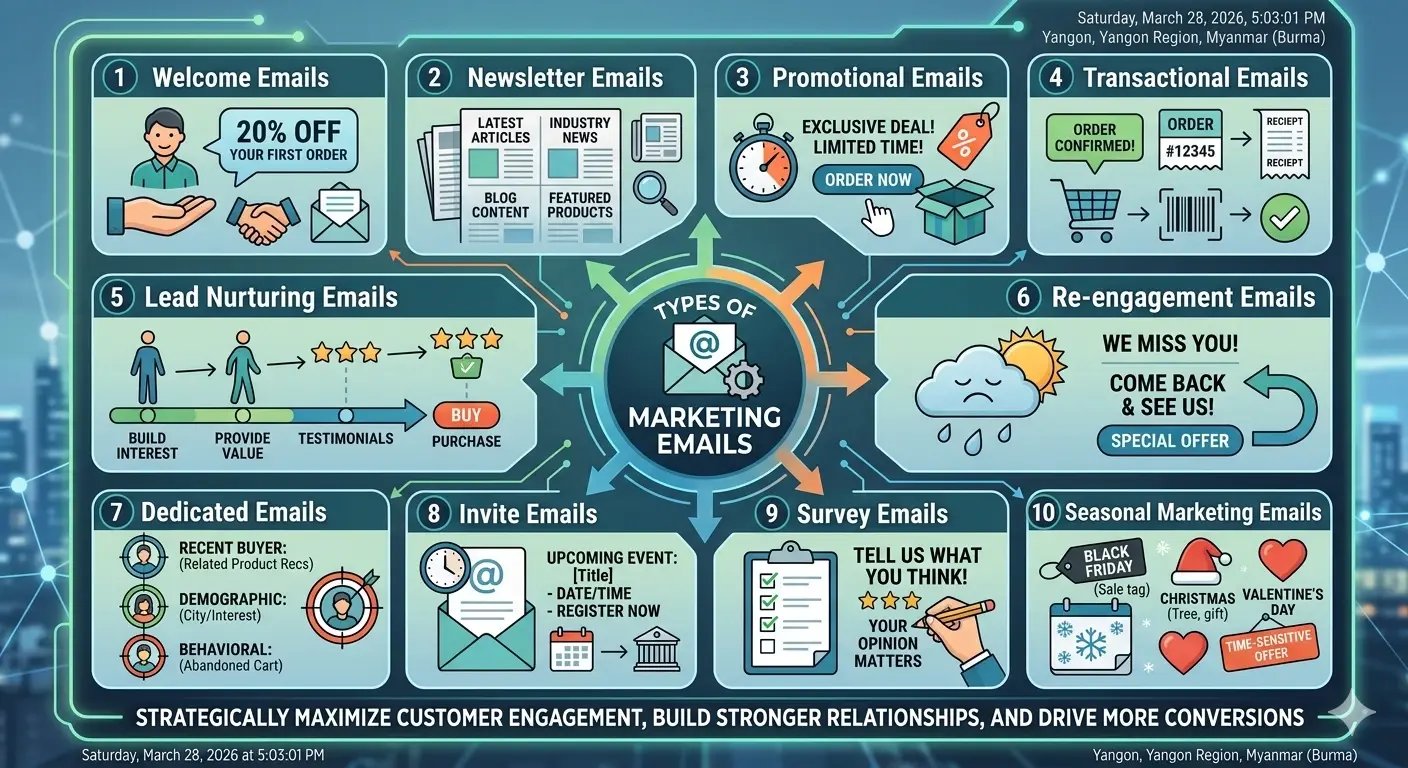
Every marketing email should have a clear goal—whether it's educating customers, increasing brand awareness, or driving specific actions like visiting your website, signing up for a free trial, or making a purchase. There are several types of marketing emails, each serving a unique purpose in your overall strategy.
1. Welcome Emails
Welcome emails introduce new subscribers or customers to your brand, setting the tone for future interactions. They often include a special offer, a product tour, or an invitation to connect further.
2. Newsletter Emails
Regular newsletters keep your audience engaged with business updates, industry news, blog content, and featured products or services. They often include a clear call to action, such as reading an article or exploring a new product.
3. Promotional Emails
Designed to drive sales and conversions, promotional emails highlight special offers, exclusive deals, or new product launches. These emails create urgency and encourage recipients to take immediate action.
4. Transactional Emails
These are automated messages triggered by customer actions, such as order confirmations, shipping updates, password resets, or receipts. While primarily functional, they can also reinforce brand trust and provide additional engagement opportunities.
5. Lead Nurturing Emails
Aimed at guiding potential customers through the sales funnel, lead nurturing emails are sent as a series to build interest in a product or service. They provide valuable content, testimonials, and special incentives to move recipients toward a purchase.
6. Re-engagement Emails
When subscribers become inactive, re-engagement emails help reignite their interest. These can include special offers, personalized recommendations, or reminders of what they’re missing.
7. Dedicated Emails
Also known as targeted emails, these are sent to a specific segment of your email list based on behaviors, interests, or demographics. For example, you might send a dedicated email to recent buyers with related product recommendations.
8. Invite Emails
These emails announce upcoming events, product launches, or webinars. They aim to increase attendance and build anticipation for special occasions.
9. Survey Emails
Customer feedback is essential for business growth. Survey emails encourage subscribers to share their opinions, helping businesses improve products, services, and overall customer experience.
10. Seasonal Marketing Emails
These emails take advantage of holidays or special occasions—such as Black Friday, Christmas, or Valentine's Day—to promote time-sensitive offers and increase engagement.
By incorporating these different types of marketing emails strategically, you can maximize customer engagement, build stronger relationships, and drive more conversions.
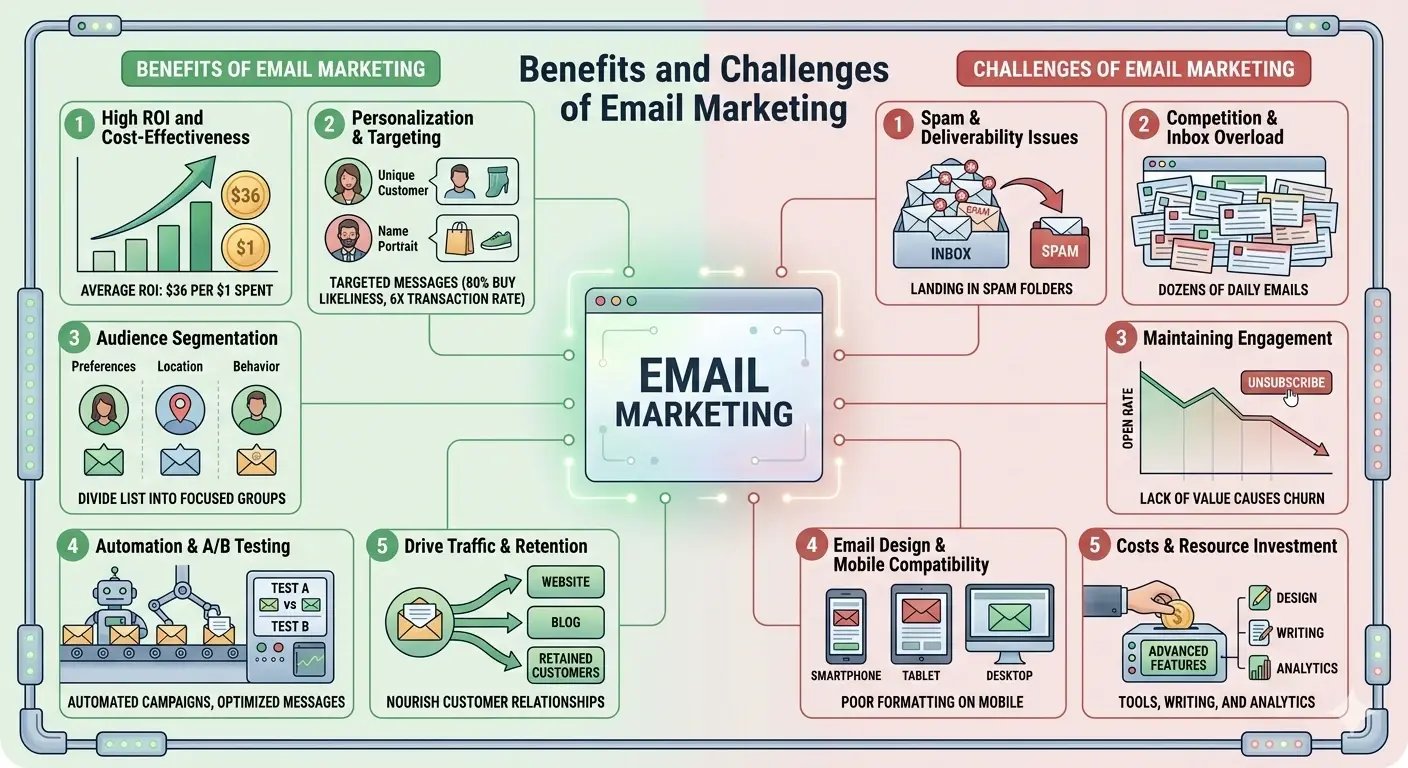
Email Marketing: Benefits and Challenges
Email marketing is a crucial component of a well-rounded digital marketing strategy, allowing businesses to connect with their audience on a personal level. When executed effectively, it can drive engagement, increase brand loyalty, and boost sales. However, like any marketing channel, it comes with both advantages and challenges.
Benefits of Email Marketing
1. High ROI and Cost-Effectiveness
Email marketing is one of the most profitable marketing channels, with an average return on investment (ROI) of $36 for every $1 spent. Compared to other digital marketing methods, it offers a low-cost way to maintain regular communication with customers while driving conversions.
2. Personalization and Targeting
One of the biggest strengths of email marketing is the ability to send highly targeted and personalized messages. Studies show that:
- 80% of customers are more likely to buy from brands that offer personalized experiences.
- Personalized emails generate transaction rates six times higher than non-personalized ones.
Using data such as past purchases, browsing behavior, or demographic details, businesses can craft relevant emails that resonate with subscribers. This can be as simple as addressing the recipient by name or as advanced as recommending products based on their browsing history.
3. Audience Segmentation for Better Engagement
Unlike mass marketing, email marketing allows for audience segmentation, meaning businesses can divide their email list into different groups based on user preferences, location, or behavior. This ensures recipients receive content that is more relevant to them, leading to higher engagement and conversion rates.
4. Automation and A/B Testing
Modern email marketing platforms allow businesses to automate campaigns, saving time while ensuring timely and relevant messages. Features like A/B testing help marketers experiment with different subject lines, content styles, and calls to action to determine what resonates most with their audience.
5. Driving Website Traffic and Customer Retention
Email marketing is an effective tool for driving traffic to blogs, landing pages, and social media platforms. It helps businesses stay top-of-mind, nurturing relationships with both new leads and existing customers to encourage repeat business.
Challenges of Email Marketing
1. Spam and Deliverability Issues
With inboxes flooded daily, many marketing emails end up in spam or junk folders. To avoid this, businesses must carefully craft subject lines, avoid spam-triggering words, and ensure recipients have opted in to receive emails.
2. Competition and Inbox Overload
Consumers receive dozens of promotional emails every day, making it difficult for brands to stand out. To capture attention, businesses must invest in compelling copy, visually appealing design, and enticing offers.
3. Maintaining Engagement
While acquiring email subscribers is relatively easy, keeping them engaged is a challenge. If emails lack value or relevance, recipients may stop opening them or unsubscribe altogether. Regular testing and optimization are essential to maintaining strong engagement rates.
4. Email Design and Mobile Compatibility
Emails need to be optimized for various devices, including smartphones, tablets, and desktops. Poor formatting, broken visuals, or lengthy load times can lead to recipients ignoring or deleting messages.
5. Costs and Resource Investment
While email marketing is cost-effective, some advanced features—such as premium automation tools, professional design, and segmentation software—may come with additional costs. Businesses also need to invest in strong copywriting and analytics to maximize effectiveness.
Final Thoughts
Despite its challenges, email marketing remains one of the most effective digital marketing strategies when executed correctly. By leveraging personalization, automation, and strategic content, businesses can build meaningful relationships with customers while driving conversions. Understanding both the benefits and potential pitfalls helps marketers craft more effective campaigns that resonate with their audience.
Getting Started with Email Marketing
Email marketing is a powerful way to connect with your audience, build brand awareness, and drive conversions. Whether you're launching your first campaign or refining your existing strategy, here’s how to get started.
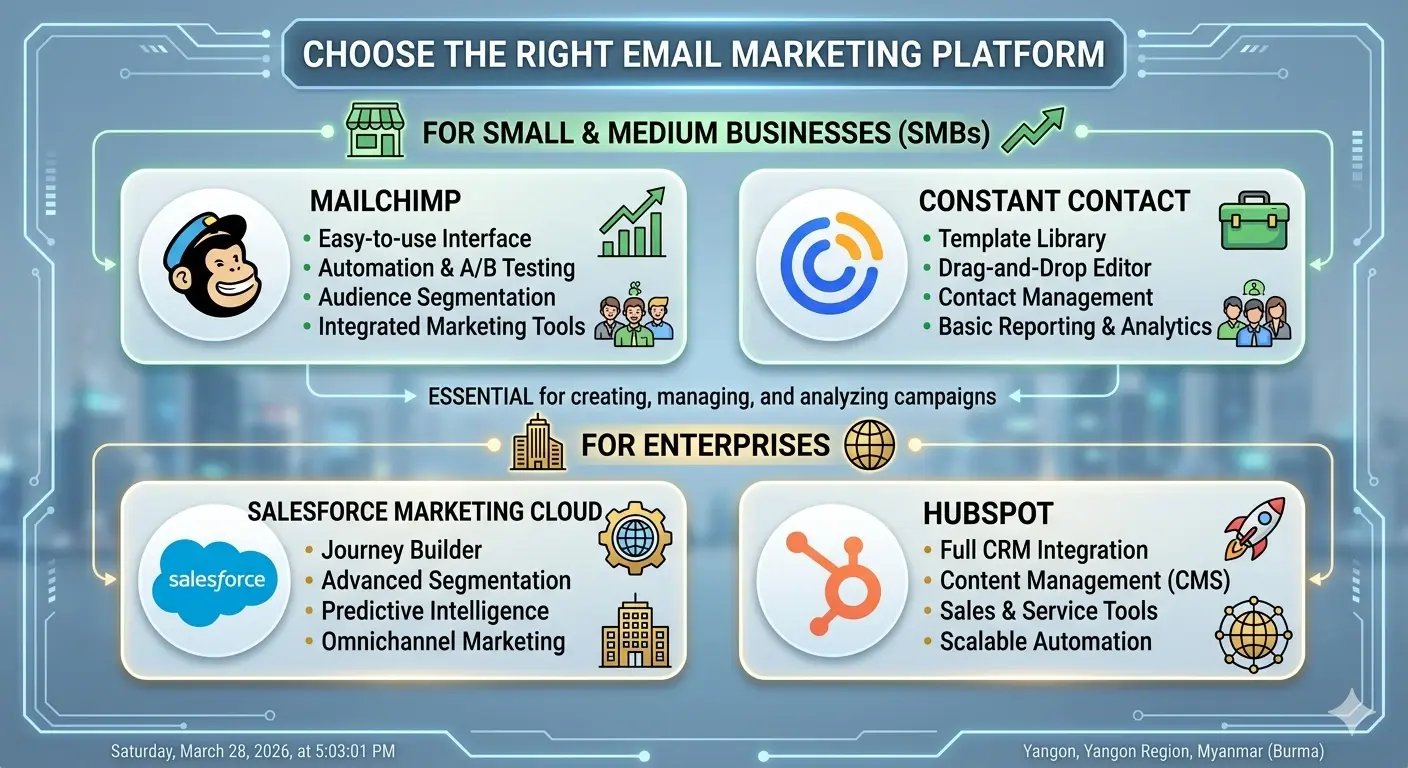
1. Choose the Right Email Marketing Platform
A reliable email service provider (ESP) is essential for creating, managing, and analyzing email campaigns. Some of the most popular platforms include:
- For Small & Medium Businesses: Mailchimp, Constant Contact
- For Enterprises: Salesforce Marketing Cloud, HubSpot
When selecting an ESP, consider key features like:
✔ Deliverability – Ensures emails reach inboxes, not spam folders.
✔ List Management – Helps segment your audience for targeted messaging.
✔ Personalization – Enables customization to boost engagement.
✔ Analytics & Reporting – Tracks performance and optimizes future campaigns.
✔ Integration – Syncs with CRM, e-commerce, and marketing automation tools.
✔ Scalability – Supports business growth with advanced features.
2. Build & Grow Your Email List
A strong email list is the foundation of successful email marketing. Here are proven tactics to expand your subscriber base:
✔ Lead Magnets
Offer valuable incentives in exchange for an email address, such as:
- Exclusive discounts
- Free eBooks or guides
- Early access to sales
Example: Clothing brand Mango offers a 10% discount to new newsletter subscribers.
✔ Membership & Loyalty Programs
Encourage signups by offering exclusive perks, early access, or rewards.
Example: Nike’s "Become a Member" program provides personalized recommendations and member-only benefits.
✔ Contests & Giveaways
Boost signups with contests where users enter by subscribing.
Example: A Super Bowl ticket giveaway with multiple entry methods, including subscribing to a newsletter.
✔ Optimized Signup Forms
Strategically place signup forms across your website, blog, and social media to maximize visibility.
Tips:
✅ Keep forms simple (just name & email).
✅ Use pop-ups or exit-intent prompts.
✅ Provide instant confirmation after signup.
3. Craft Effective Email Campaigns
✔ Write Compelling Subject Lines
Your subject line determines whether an email gets opened or ignored.
- Keep it short & attention-grabbing.
- Personalize when possible (e.g., using the recipient’s name).
- Create urgency or curiosity (e.g., "Last chance: 24-hour flash sale!").
✔ Provide Value to Your Audience
Every email should serve a purpose—educate, engage, or convert.
Effective email content includes:
📢 Announcements (new products, services, company updates)
🎁 Special offers & exclusive discounts
📖 How-to guides, blog highlights, and customer stories
✔ Use A/B Testing
Test different subject lines, content formats, and CTA buttons to determine what resonates best with your audience.
4. Maintain Engagement & Avoid Common Pitfalls
✔ Keep Subscribers Interested
- Send relevant content tailored to subscriber preferences.
- Use automation for timely follow-ups (e.g., abandoned cart emails).
- Experiment with email frequency to avoid overwhelming subscribers.
✔ Avoid Spam Filters
- Use a verified sender address.
- Avoid spam-trigger words (e.g., “free money,” “limited time offer”).
- Encourage engagement (opens, clicks, replies) to boost email credibility.
Final Thoughts
A well-executed email marketing strategy builds brand loyalty, drives sales, and keeps your business top-of-mind. By choosing the right tools, growing your subscriber list, and creating engaging content, you’ll set yourself up for email marketing success.
How to Build an Effective Email Marketing Strategy
Creating a successful email marketing strategy goes beyond writing content and hitting ‘send.’ It requires thoughtful planning, clear objectives, and ongoing optimization. Here’s how to develop a strategy that drives real results.
1. Set Clear Goals & Objectives
A strong email marketing strategy starts with well-defined goals that align with your business objectives. Using the SMART goals framework ensures your targets are:
✔ Specific – Clearly define what you want to achieve (e.g., increase newsletter signups).
✔ Measurable – Assign quantifiable metrics (e.g., grow the subscriber list by 15%).
✔ Achievable – Set realistic targets based on available resources.
✔ Relevant – Align goals with broader business objectives, like customer engagement or sales.
✔ Time-bound – Establish a deadline to track progress effectively.
Example SMART Goal:
GreenEarth Organics, an eco-friendly skincare brand, sets a goal to:
🟢 Increase newsletter signups by 15% over the next three months to grow its customer base and engagement.
- ✅ Specific: Targets newsletter signups.
- ✅ Measurable: The 15% increase provides a clear benchmark.
- ✅ Achievable: With strong marketing efforts, a 15% increase is realistic.
- ✅ Relevant: More signups contribute to customer engagement and potential sales.
- ✅ Time-bound: A three-month deadline ensures focus and accountability.
Setting SMART goals helps track success, refine strategies, and make data-driven improvements.
Would you like help structuring additional aspects of your email marketing strategy? 🚀
Creating an Effective Email Marketing Content Calendar
A well-structured content calendar helps you plan, organize, and optimize your email marketing efforts for maximum impact. Here’s how to build one:
1. Plan Around Key Dates
Align your email campaigns with important dates such as:
📅 Product launches – Announce new offerings to drive excitement.
🎉 Promotional periods & holidays – Leverage seasonal trends and special sales.
📰 Industry events & company milestones – Keep subscribers informed and engaged.
2. Find the Right Sending Frequency
Strike a balance between staying top-of-mind and avoiding inbox fatigue:
📩 Too many emails? Risk high unsubscribe rates.
📩 Too few? Lose audience interest.
💡 Monitor subscriber engagement to determine the optimal email cadence.
3. Stay Flexible & Adapt
Marketing trends and customer behavior change—your content calendar should too.
🔄 Adjust campaigns based on performance data and audience feedback.
📊 Test and refine subject lines, content styles, and send times for better engagement.